304 North Cardinal

Moisture-proof Packaging for Electronics in Southeast Asia: Why Aluminum Foil Bags Are Essential

Southeast Asia’s electronics manufacturing sector faces a moisture-proof packaging for electronics challenge that manufacturers in temperate climates do not face to the same degree: persistent, high ambient humidity that damages unprotected electronic components during storage and transit, often before the damage is detected.
This guide explains why moisture-proof packaging is not optional for electronics manufacturers operating in Southeast Asia — and why aluminum foil bags are the correct specification for components sensitive to humidity exposure.
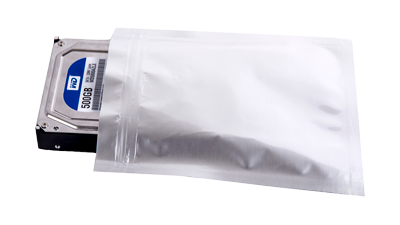
Moisture-proof Packaging for Electronics: The Southeast Asia Problem
Southeast Asia’s tropical climate is characterized by year-round high temperatures and relative humidity levels that regularly exceed 80% — and in many coastal and inland manufacturing areas, approach 90–95% during monsoon seasons.
For electronic components, this creates three specific risks:
Corrosion of Metal Contacts Exposed copper, gold-plated, and tin-plated contact surfaces absorb atmospheric moisture over time. In high-humidity environments, this moisture accelerates oxidation and corrosion — degrading contact resistance, increasing solder joint failure rates, and ultimately reducing component reliability in service.
The Popcorn Effect in Reflow Soldering Moisture-sensitive devices (MSDs) — surface-mount components including ICs, BGAs, and QFPs — absorb atmospheric moisture when stored without moisture barrier packaging. When these components are subsequently placed through reflow soldering, the absorbed moisture vaporizes rapidly as internal temperature spikes, creating steam pressure that can cause internal delamination, cracking, or catastrophic package failure. Industry engineers call this the “popcorn effect.”
JEDEC standard J-STD-033 classifies moisture-sensitive components by Moisture Sensitivity Level (MSL), from MSL 1 (unlimited floor life) to MSL 6 (requires baking before use). Components at MSL 2 and above require sealed moisture barrier packaging for storage — a requirement that is frequently underspecified or ignored in operations that do not use aluminum foil barrier bags.
Delamination and Adhesion Failure High humidity accelerates moisture diffusion into polymeric packaging materials, reducing interfacial adhesion strength and promoting delamination of PCB substrate layers and component packages over time. Research confirms that delamination areas exceeding 5% in ball grid array (BGA) packages represent a functional failure criterion — damage that begins during storage and manifests as field failures after installation.
Why Standard Packaging Is Insufficient
The most common packaging mistakes that allow moisture damage in Southeast Asia operations:
Standard Polyethylene Bags Polyethylene has a high moisture vapor transmission rate (MVTR) — moisture passes through the film over time. In a high-humidity environment, a PE bag provides meaningful moisture protection for days, not weeks or months. For components stored or in transit for extended periods, PE bags are inadequate.
Metalized (Aluminized) Bags Vacuum-deposited aluminum coating on a plastic film provides better barrier performance than plain PE, but the aluminum layer is typically only 0.01–0.05 microns thick. MVTR performance is significantly lower than solid aluminum foil — making metalized bags a moderate barrier solution, not a high-barrier solution for long-term storage or ocean freight.
No Packaging at All Components stored in open trays or cardboard boxes in warehouse environments with no humidity control are exposed directly to ambient humidity — the highest-risk scenario in Southeast Asia’s climate.
Aluminum Foil Bags: The Correct Specification
Aluminum foil composite bags — constructed from PET outer film, solid aluminum foil core, and anti-static PE inner layer — provide near-zero moisture vapor transmission rate (WVTR typically < 0.01 g/m²/24hr). This is the material characteristic that distinguishes aluminum foil bags from all plastic-based alternatives.
The aluminum foil layer, even at 7–12 microns thickness, is a continuous metallic barrier that moisture vapor cannot penetrate through the film body. Moisture ingress in a properly heat-sealed aluminum foil bag is essentially zero for the life of the seal — regardless of ambient humidity levels outside the bag.
For electronics manufacturers in Southeast Asia, this means:
- Components stored in sealed aluminum foil bags maintain their MSL floor life countdown from zero — the sealed bag creates a controlled environment equivalent to a humidity-controlled room
- Ocean freight shipments of 4–6 weeks duration from Southeast Asia to Europe or North America maintain component integrity regardless of container humidity cycling during transit
- Warehouse storage in non-humidity-controlled facilities is safe for MSL 2 and above components when sealed in aluminum foil bags with appropriate desiccant
Using Aluminum Foil Bags Correctly: 4 Key Requirements
1. Heat Seal — Not Fold and Tuck The barrier performance of an aluminum foil bag is only as good as its seal. Folding and tucking the open end provides no meaningful moisture barrier. All aluminum foil bags must be heat-sealed after loading to create an airtight closure.
2. Include Desiccant for MSL 2 and Above For moisture-sensitive devices, include a silica gel desiccant packet sized appropriately for the bag volume inside the sealed bag. The desiccant actively removes residual moisture from the internal air volume after sealing, maintaining internal relative humidity below 10%.
3. Include a Humidity Indicator Card (HIC) A humidity indicator card inside the sealed bag provides visual confirmation of bag integrity at the point of opening. If the card indicates elevated humidity, the seal was compromised and the components require baking per J-STD-033 before use.
4. Match Bag Specification to Component MSL Not all components require the same level of moisture protection. Check component datasheets for MSL classification and select bag specification accordingly. MSL 1 components do not require sealed moisture barrier packaging. MSL 2 and above require sealed aluminum foil bags with desiccant.
Frequently Asked Questions
How long can components be stored in a sealed aluminum foil bag?
When properly heat-sealed with appropriate desiccant, most components can be stored for 12 months or more while maintaining full moisture protection. For storage beyond 12 months, reseal with fresh desiccant. Always verify the component manufacturer’s recommended dry-pack storage conditions.
Do I need humidity-controlled warehouse storage if I use aluminum foil bags?
For components sealed in aluminum foil bags with desiccant, warehouse humidity control is not required for the sealed components themselves. Humidity control remains important for components that have been removed from sealed bags and are awaiting assembly.
Can I reuse aluminum foil bags?
Heat-sealed aluminum foil bags are designed for single use. Once the seal is broken, the bag cannot be reliably re-sealed to the original standard without a heat sealer and fresh desiccant. For applications requiring repeated access, zip-lock anti-static bags are the alternative.
What is the difference between moisture-proof aluminum foil bags and standard anti-static bags?
Standard anti-static bags (pink polyethylene) provide ESD surface charge dissipation but no meaningful moisture barrier — polyethylene has a high MVTR. Aluminum foil composite bags provide both ESD shielding (Faraday cage effect) and near-zero moisture barrier performance. For components requiring both protections, aluminum foil bags are the correct single-material solution.
How do I know if my components need moisture-proof packaging?
Check the component manufacturer’s datasheet for Moisture Sensitivity Level (MSL) classification. MSL 2 and above components require sealed moisture barrier packaging. If the datasheet is not available, contact the component manufacturer directly — treating unclassified components as MSL 2 is the conservative default.
Mavis manufactures aluminum foil composite bags, anti-static packaging, and moisture barrier solutions for electronics manufacturers across Southeast Asia. Contact us for specifications, compliance documentation, and custom sizing: mavisv.com/contact