304 North Cardinal

Aluminum Foil Composite Bags: Types, Applications, and How to Choose the Right One

Introduction
For electronics manufacturers and industrial suppliers across Southeast Asia, aluminum foil composite bags are one of the most important — and most misunderstood — packaging materials in the supply chain.
Not all foil bags are the same. The difference between a properly specified aluminum foil composite bag and a generic alternative can mean the difference between a component that arrives intact and one that fails within weeks of installation.
This guide covers everything procurement managers and engineers need to know: how aluminum foil composite bags are constructed, the main types available, their applications in electronics and industrial packaging, and a practical framework for choosing the right specification for your products.
What Are Aluminum Foil Composite Bags?
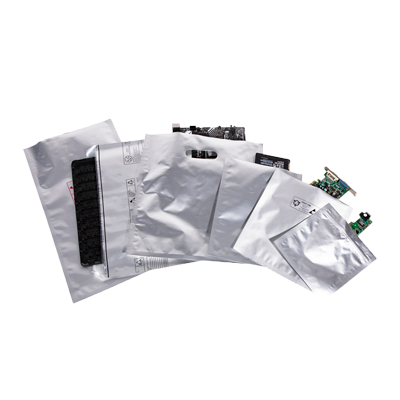
Aluminum foil composite bags are multi-layer flexible packaging materials that combine aluminum foil with one or more plastic film layers to create a high-performance protective barrier. The aluminum foil layer provides the core barrier properties — blocking moisture, oxygen, light, and electrostatic fields — while the surrounding plastic layers add mechanical strength, flexibility, and sealability.
The result is a packaging material that simultaneously protects against:
- Electrostatic discharge (ESD) — the aluminum layer creates a Faraday cage effect, shielding contents from external electrostatic fields
- Moisture and humidity — critical for sensitive electronics in tropical environments
- Oxygen and corrosion — prevents oxidation of exposed metal contacts and components
- Light — UV and visible light can degrade certain materials over time
- Physical damage — the laminated structure resists punctures and tears during handling and transit
This combination of properties makes aluminum foil composite bags the standard protective packaging solution for high-value electronic components across global supply chains.
Layer Structure: What’s Inside an Aluminum Foil Composite Bag
Understanding the layer structure helps buyers evaluate quality and specify the right product. A standard aluminum foil composite bag for electronics packaging consists of three primary layers:
Layer 1: Outer Film (PET — Polyester)
The outermost layer is typically made from polyethylene terephthalate (PET), also known as polyester film. PET provides:
- High tensile strength and puncture resistance
- Dimensional stability (doesn’t stretch during printing or handling)
- A printable surface for labeling and identification
- Moderate moisture and oxygen barrier properties
Layer 2: Aluminum Foil (Core Barrier Layer)
The middle aluminum foil layer is the functional core of the bag. When properly manufactured, aluminum foil delivers near-zero water vapor transmission rate (WVTR) and oxygen transmission rate (OTR) — meaning virtually no moisture or gas passes through. The foil layer also provides:
- Electrostatic shielding (Faraday cage effect)
- UV and light barrier
- Thermal insulation
The thickness of the foil layer directly affects performance. Standard electronics packaging foil typically ranges from 7 to 12 microns. Thicker foil provides stronger barrier properties but reduces flexibility.
Layer 3: Inner Sealant Film (PE — Polyethylene)
The innermost layer is typically low-density polyethylene (LDPE) or an anti-static polyethylene variant. This layer:
- Provides the heat-sealable surface for closing the bag
- Forms the direct contact surface with packaged components
- In anti-static variants, prevents charge transfer to component surfaces
Standard structure notation: PET / AL / PE (outer to inner)
For applications requiring additional mechanical strength, a nylon (PA) layer is sometimes added: PET / AL / NY / PE — providing enhanced tear resistance for heavier components or rough handling environments.
Main Types of Aluminum Foil Composite Bags
Type 1: Standard Three-Side Seal Bags
The most common format — three sides are factory-sealed, with one open end for loading components. After loading, the open end is heat-sealed. Available in a wide range of standard sizes.
Best for: Individual components, ICs, sensors, small PCB assemblies
Type 2: Zip-Lock (Resealable) Bags
A zip-lock closure replaces or supplements the heat-seal, allowing the bag to be opened and resealed multiple times. Useful for components that are accessed repeatedly before final installation.
Best for: Sample kits, components accessed during testing phases, reusable storage
Type 3: Stand-Up Pouches
Gusseted base allows the bag to stand upright, increasing storage efficiency and visibility. Suitable for larger or heavier components.
Best for: Larger PCB assemblies, multiple components per bag, warehouse storage
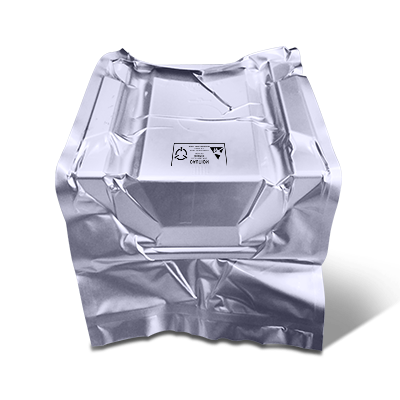
Type 4: Vacuum Seal Bags
Designed for vacuum packaging — air is removed before sealing to further reduce moisture and oxygen exposure. Particularly important for moisture-sensitive devices (MSDs) classified under JEDEC J-STD-033.
Best for: Long-term storage, ocean freight shipments, moisture-sensitive surface-mount devices
Type 5: Custom-Printed Bags
Standard aluminum foil composite bags with custom printing — company logo, part numbers, handling instructions, ESD warning symbols. Custom printing supports inventory management and brand consistency.
Best for: High-volume production environments, OEM packaging, export shipments requiring identification
Key Applications in Electronics and Industrial Packaging
Semiconductors and Integrated Circuits (ICs)
Semiconductors are among the most ESD-sensitive components in electronics manufacturing. Aluminum foil composite bags provide the dual protection these components require: electrostatic shielding against external fields, and moisture barrier protection against the humidity levels common across Southeast Asia’s manufacturing regions.
Printed Circuit Boards (PCBs)
PCBs combine ESD-sensitive components with metal contacts susceptible to oxidation and corrosion. Aluminum foil composite bags protect against both failure modes simultaneously — a key advantage over packaging solutions that address only one risk factor.
Hard Drives and Storage Devices
Storage devices are particularly sensitive to both ESD and moisture. The combination of Faraday cage shielding and near-zero WVTR makes aluminum foil composite bags the industry standard for storage device packaging in transit and warehouse environments.
Precision Sensors and Instruments
High-precision sensors used in industrial automation, medical devices, and measurement equipment combine ESD sensitivity with requirements for long-term storage stability. Aluminum foil composite bags — particularly vacuum-sealed variants — maintain component integrity over extended storage periods.
Surface-Mount Devices (SMDs) for Reflow Processing
Surface-mount components are classified by moisture sensitivity level (MSL) under JEDEC J-STD-033. Higher MSL components require sealed moisture barrier packaging with desiccant to prevent moisture absorption that causes damage during reflow soldering. Aluminum foil composite bags are the standard packaging solution for MSL 2 and above components.
How to Choose the Right Aluminum Foil Composite Bag
Use the following criteria to specify the correct bag for your application:
1. Determine Your Primary Protection Requirement
| Primary Risk | Recommended Specification |
|---|---|
| ESD damage only | PET/AL/anti-static PE, standard seal |
| Moisture + ESD | PET/AL/PE, heat-seal or vacuum seal |
| Long-term storage | PET/AL/PE with vacuum seal + desiccant |
| Rough handling environment | PET/AL/NY/PE (nylon layer added) |
| Repeated access needed | Zip-lock closure variant |
2. Match Foil Thickness to Protection Level
| Foil Thickness | Protection Level | Typical Application |
|---|---|---|
| 7–9 microns | Standard | General electronics packaging |
| 9–12 microns | Enhanced | High-value components, long transit |
| 12+ microns | Heavy duty | Industrial components, harsh environments |
3. Verify the Inner Layer Specification
For ESD-sensitive components, the inner PE layer must be an anti-static grade — not standard polyethylene. Standard PE can generate static charges on contact with components. Confirm with your supplier whether the inner layer is:
- Standard PE (not suitable for direct contact with ESD-sensitive components)
- Anti-static PE (suitable for direct contact)
- Conductive PE (for highest-sensitivity applications)
4. Consider Your Sealing Method and Equipment
Heat-seal bags require a heat sealer on your production line. If your facility does not have heat-sealing equipment, zip-lock bags offer a practical alternative. For vacuum packaging, a vacuum sealer is required — confirm availability before specifying vacuum seal bags.
5. Specify Dimensions Accurately
Oversized bags waste material and create loose packaging that allows components to shift during transit. Undersized bags stress the seal during loading. Standard sizing guidance:
- Bag width = component width + 20–30mm
- Bag length = component length + 40–50mm (to accommodate heat seal area)
- For PCBs: add 10mm clearance on all sides
6. Request Compliance Documentation
For B2B procurement, especially when your customers have quality management systems, request:
- Surface resistance test reports (IEC 61340-5-3)
- Shielding effectiveness data (energy < 20nJ per IEC 61340-4-8)
- WVTR (Water Vapor Transmission Rate) data
- Material Safety Data Sheets (MSDS) if required for customs
Frequently Asked Questions
Q: What is the difference between aluminum foil composite bags and metalized (aluminized) bags? Aluminum foil composite bags contain a solid layer of aluminum foil, providing near-zero moisture and gas transmission. Metalized bags have a thin aluminum coating deposited onto a plastic film — the coating is typically only a fraction of a micron thick, providing significantly lower barrier performance. For ESD shielding, metalized bags can be adequate; for moisture barrier protection, aluminum foil bags are substantially superior.
Q: Do aluminum foil composite bags need to be used with desiccant? For standard short-term storage and transit, aluminum foil composite bags provide sufficient moisture protection on their own. For long-term storage (more than 12 months), ocean freight, or components with high moisture sensitivity classifications (MSL 3 and above per JEDEC J-STD-033), including desiccant inside a vacuum-sealed bag is recommended.
Q: Can aluminum foil composite bags be reused? Heat-seal bags are designed for single use — the heat seal cannot be reliably re-sealed after opening without specialized equipment. Zip-lock variants can be reused multiple times, though the zip-lock seal degrades over repeated cycles. For applications requiring repeated access to components, zip-lock bags are the appropriate choice.
Q: What bag size should I order for PCBs? Add approximately 20–30mm to the PCB width and 40–50mm to the PCB length to accommodate the heat seal area and allow comfortable loading. For example, a 150mm × 200mm PCB would typically use a 180mm × 250mm bag.
Q: How should aluminum foil composite bags be stored before use? Store in a cool, dry environment — ideally at 15–25°C with relative humidity below 60%. High humidity (above 70%) can affect the PE inner layer’s flexibility over time. Avoid exposure to sharp objects that could puncture the foil layer.
Q: Are aluminum foil composite bags available with custom printing? Yes. Custom printing on the outer PET layer supports part number identification, handling instructions, ESD warning symbols, and company branding. Minimum order quantities for custom-printed bags vary by supplier — contact us at mavisv.com for specific requirements.
Conclusion
Aluminum foil composite bags are not a commodity purchase — the specification matters. Choosing the right layer structure, foil thickness, inner film type, and closure format directly affects how well your components are protected through storage, transit, and the high-humidity conditions common across Southeast Asia’s supply chain.
The key decisions are straightforward once you understand the structure: identify your primary protection requirements, verify the inner layer specification for ESD compatibility, confirm your sealing method, and request compliance documentation from your supplier.
For components that matter, the packaging that protects them should be specified with the same care.
Mavis specializes in aluminum foil composite bags, anti-static ESD packaging, and eco-friendly industrial packaging solutions for manufacturers across Southeast Asia. Contact us for product specifications, compliance documentation, and custom sizing: mavisv.com/contact