
Desiccant and humidity indicator cards are the two smallest items in a dry pack — and the two that decide whether a moisture barrier bag actually protects the components inside it. The bag keeps outside humidity out. The desiccant absorbs the moisture that was sealed in with the parts. The humidity indicator card (HIC) tells the person who opens the bag whether all of that worked. Get either one wrong, and a perfectly good foil bag can still deliver parts that crack during reflow.
This guide explains what goes into a dry pack under IPC/JEDEC J-STD-033, how desiccant is sized, how to read a 5-10-60% humidity indicator card, and what floor life and baking mean on the production line. For the bag itself, see our guides to moisture-proof packaging for electronics and metallized vs aluminum foil bags.
What Is a Dry Pack?
A dry pack is the packing method J-STD-033 uses for moisture-sensitive devices (MSDs). It has four parts:
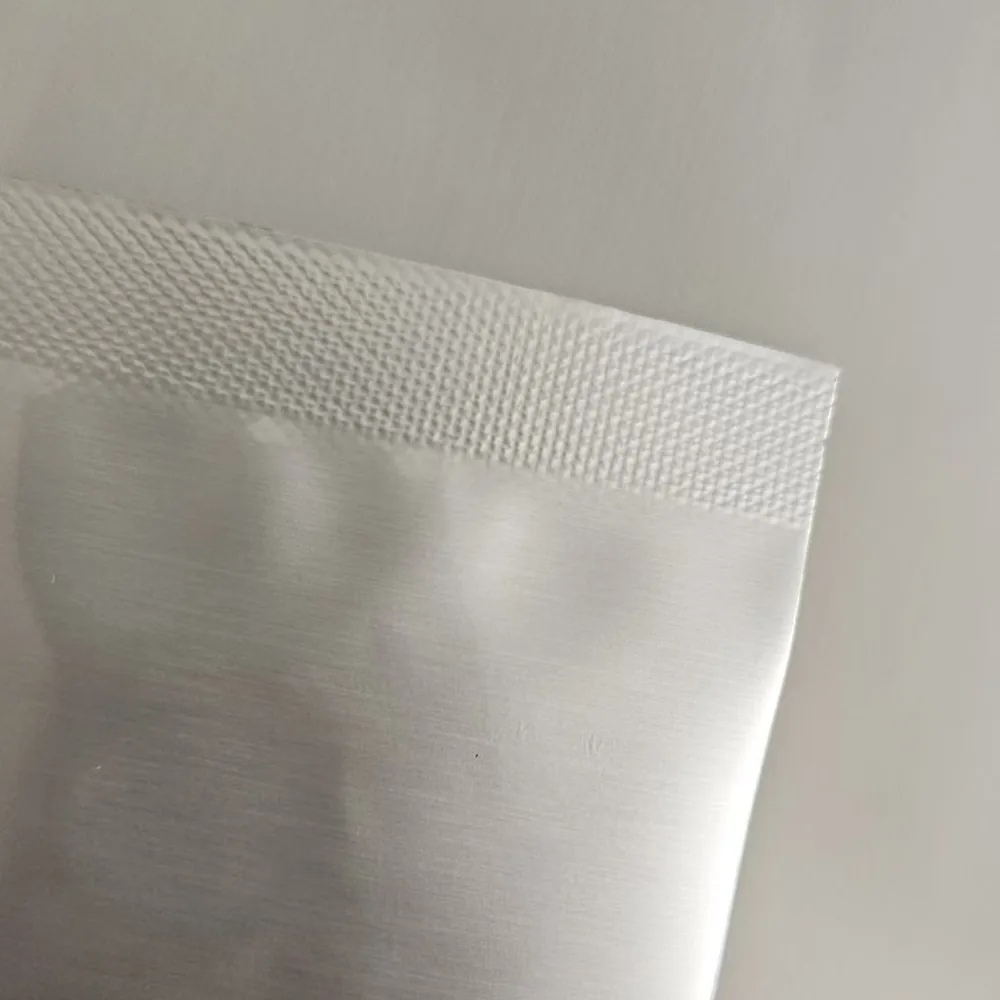
- Moisture barrier bag (MBB) — usually a heat-sealed aluminum foil moisture barrier bag.
- Desiccant — absorbs the moisture left inside the bag.
- Humidity indicator card — shows the humidity inside the bag at the moment it is opened.
- Labels — a moisture-sensitive identification label on the outside and a caution label stating the moisture sensitivity level (MSL), the bag seal date and the shelf life.
Parts are normally baked or confirmed dry before they are sealed. Light vacuum sealing is optional; see aluminum foil vacuum bags for when it helps.
Why a Sealed Bag Still Needs Desiccant
Even a foil bag with a typically near-zero WVTR traps the air that was inside it when it was sealed — and that air carries moisture, especially when parts are packed in a humid Southeast Asian factory. A small amount of moisture also permeates through the seals over months of storage. Desiccant absorbs both, keeping the humidity inside the bag low for the whole storage period.
Choosing Desiccant
Common desiccant types
- Silica gel — the most widely used; good capacity at room temperature.
- Clay (bentonite) — a lower-cost option, common in general packaging.
- Molecular sieve — holds moisture strongly at very low humidity; used where very dry conditions are needed.
J-STD-033 refers to desiccant meeting MIL-D-3464, which is specified in “units” of absorption capacity rather than by weight. Use low-dusting desiccant in sealed pouches, so particles cannot reach the components.
How much desiccant to use
J-STD-033 sizes desiccant from four inputs: the bag’s surface area, the bag’s water vapor transmission rate, the required shelf life, and the capacity of the desiccant. Larger bags, higher-WVTR bags and longer storage all need more units. Desiccant suppliers publish calculators based on the standard; use one, or follow the standard’s calculation, rather than estimating by eye.
Two practical rules: choose a bag size that leaves room for the desiccant and the HIC without stretching the seal area, and keep desiccant in its sealed container until the moment of packing — an open pack starts absorbing room moisture straight away.
How to Read a Humidity Indicator Card
A J-STD-033 humidity indicator card has three spots, at 5%, 10% and 60% relative humidity. Each spot changes color when the humidity around it rises above its level. Colors differ between card types — traditional cobalt cards turn from blue to pink, while cobalt-free cards use other color pairs — so always read the card against its own legend.
Read the card as soon as the bag is opened, before it has time to react to room air:
- 10% spot still dry: the bag held; parts can go to the line within their floor life.
- 10% spot shows humid: for MSL 2a–5a parts, J-STD-033 calls for baking before reflow.
- 60% spot shows humid: the dry pack has clearly failed; MSL 2 parts also need baking, and a card whose 60% spot has changed should not be reused.
This is a summary; follow the decision table in the current revision of J-STD-033.
Floor Life and MSL Levels
Once the bag is opened, the clock starts. Floor life is the time a component can spend in factory air (up to 30°C / 60% RH) before reflow. It is set by the component’s moisture sensitivity level, classified under IPC/JEDEC J-STD-020 and printed on the label:
| MSL | Floor life |
|---|---|
| 1 | Unlimited (at ≤30°C / 85% RH) |
| 2 | 1 year |
| 2a | 4 weeks |
| 3 | 168 hours |
| 4 | 72 hours |
| 5 | 48 hours |
| 5a | 24 hours |
| 6 | Bake before use; time on label |
Exceed the floor life and the parts must be baked before reflow. Resealing an opened bag with fresh desiccant, or storing parts in a dry cabinet, can pause the clock under rules set out in J-STD-033 — but the clock does not simply reset.
Common Mistakes
- Reusing desiccant from an opened bag. Its remaining capacity is unknown. Use fresh desiccant every time a bag is sealed.
- Leaving desiccant exposed before packing. Open containers only as needed and reseal them.
- Reading the HIC late. A card left in room air for several minutes no longer shows what was inside the bag.
- Sealing parts that are already past floor life. Bake them first; sealing does not dry them.
- Using a bag that is not suited to dry packing. Many metallized bags have a much higher WVTR than foil; ask for WVTR data measured after flex testing.
- Poor seals. Wrinkles, contamination or a narrow seal let moisture in, however good the film is. Check seal settings on a sample run.
Frequently Asked Questions
Can desiccant be reused?
Some desiccants can be dried out and regenerated by heating, but in a dry pack the safe practice is to use fresh desiccant every time a bag is sealed, because it is hard to confirm how much capacity a used pack has left.
Do I still need an HIC in a vacuum-sealed bag?
Yes. Vacuum sealing removes most of the air, but the card is the only way the person who opens the bag can confirm it stayed dry in transit.
Where should the HIC go inside the bag?
On top of the parts or reels, where it is visible as soon as the bag is opened, and not in direct contact with the desiccant pack.
Does a dry pack also protect against ESD?
Only if the bag does. A foil moisture barrier bag with an anti-static inner layer provides both moisture and ESD protection; desiccant and HICs add neither. See anti-static aluminum foil bags vs standard ESD bags.
Conclusion
Desiccant and humidity indicator cards turn a sealed bag into a dry pack that can be checked. The bag sets the barrier, the desiccant handles the moisture sealed in with the parts, and the HIC gives the receiving line a clear decision: use, or bake. Size the desiccant to the bag, read the card as soon as the bag is opened, and track floor life from that moment.
Specification sheets are available on request.
Mavis Packing produces aluminum foil moisture barrier bags and vacuum bags on our own foil-bag line in Suzhou, for electronics manufacturers across Southeast Asia. Contact us with category, size, quantity and application for a 24h quote.