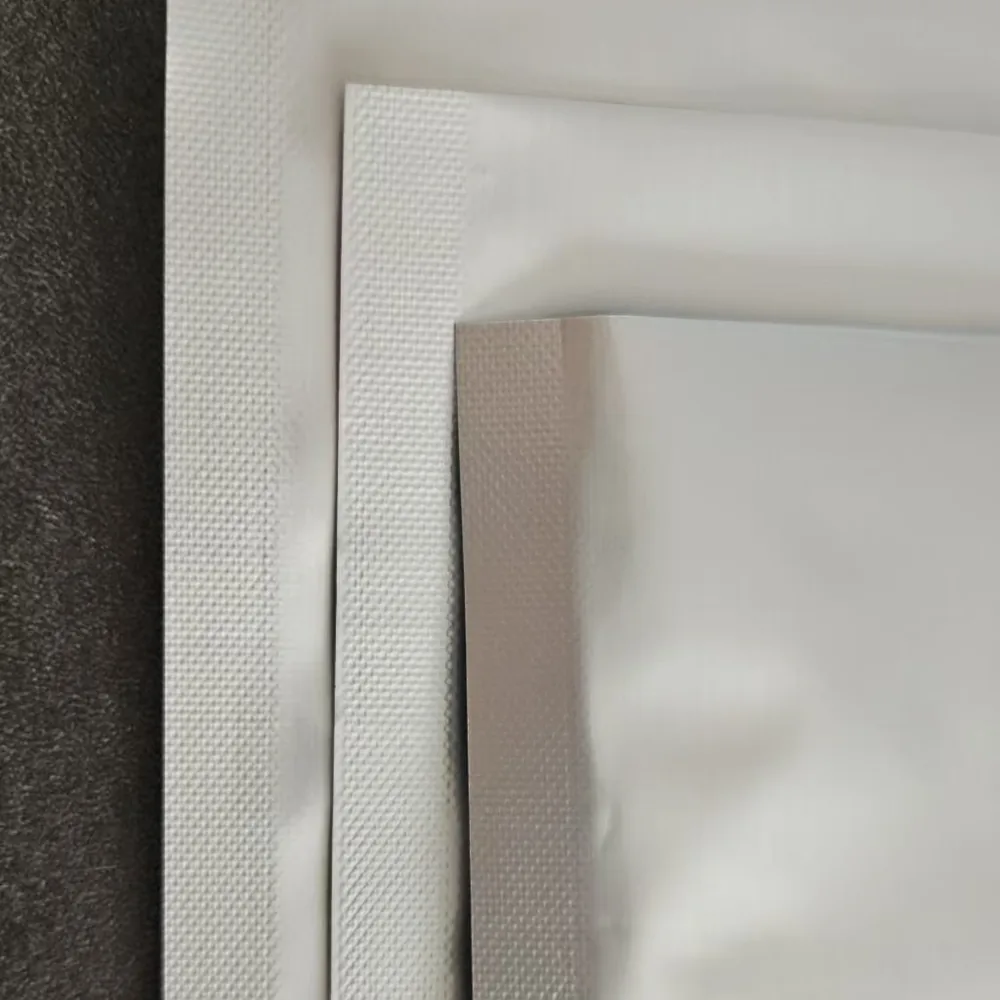
Choosing between metallized vs aluminum foil bags is one of the first decisions in an electronics packaging specification — and one of the easiest to get wrong. Both bags are silver, both are heat-sealed, and both are sold as barrier bags. But one is built around a continuous sheet of aluminum foil, while the other carries an aluminum coating hundreds of times thinner. That difference decides whether a bag can protect a moisture-sensitive device through weeks in a humid shipping container, or only keep light and dust off a cable assembly on a short trip.
This guide compares the two constructions on seven factors, gives a winner for each, and ends with a decision matrix for common electronics and industrial applications. For background on why humidity is such a risk for electronics in the region, see our guide to moisture-proof packaging for electronics in Southeast Asia.
Material Construction
A solid aluminum foil bag is a laminate built around a continuous aluminum foil layer, typically 7–12 microns thick. The common structure, from outside to inside, is PET / AL / PE: a printable polyester film, the foil core, and a polyethylene sealant layer, which is often anti-static. Vacuum and heavy-duty versions add a nylon layer (PET / AL / NY / PE) for puncture resistance. Our guide to aluminum foil composite bags covers each layer in detail.
A metallized bag replaces the foil with a plastic film that has been coated with aluminum in a vacuum chamber. The coating is typically 0.01–0.05 microns thick and sits on a PET or OPP carrier film, laminated to a PE sealant layer. Metallized bags come in two common forms:
- Opaque metallized barrier bags — silver and reflective, used as a lower-cost moisture and light barrier. Also sold as aluminum-plated foil bags.
- Translucent static-shielding bags — a thin buried metal layer you can see through, designed for ESD shielding rather than moisture protection. See anti-static aluminum foil bags vs standard ESD bags for how they compare.
The comparison below focuses on solid foil versus opaque metallized barrier bags, and notes where static-shielding bags fit.
Performance Comparison: 7 Key Factors
1. Moisture Barrier
Water vapor cannot pass through intact aluminum foil; it can only enter through the seals, pinholes or damage. A properly heat-sealed foil bag therefore has a moisture vapor transmission rate (WVTR) that is typically near zero. A metallized coating is too thin to be a perfectly continuous layer — microscopic gaps in the coating let some vapor through — so its WVTR is substantially higher than foil’s, although still far lower than plain polyethylene.
For moisture-sensitive devices dry-packed under IPC/JEDEC J-STD-033, moisture barrier bags are judged on WVTR measured after flex testing (ASTM F392 flexing followed by ASTM F1249 measurement). Foil laminates are the usual construction for this job. If a metallized bag is offered for MSL-rated parts, ask the supplier for that flex-then-WVTR result before approving it.
Winner: Solid aluminum foil.
2. Oxygen and Light Barrier
Intact foil is effectively opaque to light and a very high oxygen barrier. Metallized film blocks most visible and UV light and reduces oxygen transmission, but how much depends on how heavily the film is metallized (its optical density). For oxidation-sensitive contacts, plated finishes and long storage periods, foil is the safer specification.
Winner: Solid aluminum foil.
3. Flex and Handling Durability
This is where metallized film earns its place. Thin foil can develop pinholes when a bag is repeatedly folded, crushed or vibrated in transit — a failure mode known as flex cracking. In a 2020 laboratory study using the Gelbo flex test (ASTM F392), foil laminates lost much of their oxygen barrier after heavy flexing, while metallized laminates were less affected; water vapor barrier held up better than oxygen barrier in all of them. In practice, pack foil bags so they are not repeatedly refolded, and use a nylon-reinforced structure for vacuum and heavy-duty bags.
Winner: Metallized film — for flex tolerance, not for barrier.
4. ESD Shielding
Both materials conduct, but ESD shielding is a tested property of the finished bag, not of the metal alone. A foil laminate with an anti-static inner layer forms a continuous Faraday-cage enclosure and is the standard choice when a part needs both shielding and moisture protection. Translucent static-shielding bags are designed for shielding and should come with shielding test data (energy inside the bag, measured per IEC 61340-4-8 or ANSI/ESD STM11.31). A general-purpose metallized barrier bag provides only partial shielding unless it has been tested for it. For the basics, see our guide to anti-static packaging.
Winner: Solid aluminum foil, when shielding and moisture protection are both required.
5. Visibility and Inspection
Foil bags are opaque, so contents must be identified from the outside label, and a humidity indicator card inside the bag can only be read once the bag is opened. Translucent static-shielding bags let receiving inspection read part labels without opening the bag. Opaque metallized barrier bags offer no advantage over foil here.
Winner: Translucent metallized static-shielding bags.
6. Weight and Cost
Metallized film uses far less aluminum and is lighter, so metallized bags usually cost less per unit, especially in larger sizes. Foil bags cost more, but for moisture-sensitive parts the comparison that matters is the cost of a failed dry pack: baking, rework or a latent failure in the field.
Winner: Metallized on unit cost; foil on cost of failure.
7. Printing and Sealing
Both constructions use a printable outer film and a PE sealant layer, so custom printing, part-number marking and heat sealing work the same way. Seal settings depend on total thickness, so confirm temperature and dwell time on a sample run before production.
Winner: Tie.
Decision Matrix
| Application | Recommended bag |
|---|---|
| MSL 2 and above, dry-packed per J-STD-033 | Solid aluminum foil moisture barrier bag with desiccant and HIC |
| Long storage or ocean freight in humid climates | Solid foil, vacuum-sealed where required |
| ESD-sensitive and moisture-sensitive parts | Anti-static solid aluminum foil bag |
| ESD-sensitive PCBs, short-term handling, labels must be readable | Translucent static-shielding bag |
| Cables, connectors and accessories (light and dust protection) | Opaque metallized barrier bag |
| Retail or promotional packs with a metallic finish | Opaque metallized barrier bag |
| Bulk liners and large-format bags | Solid foil, large format |
When Metallized Bags Are the Right Choice
Metallized bags make sense when the product has no moisture sensitivity classification, the storage period is short, the bag will be opened and refolded often, or unit cost and weight dominate the decision. Typical examples are cables and connectors, mechanical spares, accessories, retail packs, and regional shipments with short transit times.
When Solid Aluminum Foil Is the Clear Specification
Specify solid foil when any of these apply: the component carries an MSL rating of 2 or higher; the shipment will spend weeks in an ocean container or in a warehouse without humidity control in Southeast Asia; the part needs both ESD shielding and moisture protection; or storage will run beyond a few months. In these cases the extra cost per bag is small next to the cost of baking, rework or a field failure.
Frequently Asked Questions
Is a metallized bag the same as a moisture barrier bag?
Not necessarily. In electronics, a moisture barrier bag (MBB) usually means a bag qualified for dry packing under J-STD-033, which in practice is usually a foil construction. Some metallized bags are sold as barrier bags; ask for WVTR data measured after flex testing before using one for MSL-rated parts.
How can I tell a foil bag from a metallized bag?
Hold the bag up to a strong light: a foil bag stays dark, while many metallized films let some light through or show pinpoints of light. The cut edge of a foil laminate also shows a distinct metal layer. The reliable answer, though, is the supplier’s structure description and test data.
Which bag is better for vacuum packing?
Solid foil with a nylon layer (PET / AL / NY / PE) is the usual choice, because it combines the moisture barrier with puncture resistance under vacuum. Our guide to aluminum foil vacuum bags explains the full process.
Do I need desiccant in both types of bag?
For dry packing moisture-sensitive devices, a desiccant pack and a humidity indicator card go inside the foil bag as part of J-STD-033 practice. For general storage of non-sensitive parts in metallized bags, desiccant is optional and depends on the climate and storage time.
Conclusion
The choice between metallized vs aluminum foil bags is not about which material is better overall; it is about what the bag has to protect against. Solid aluminum foil is the specification for moisture-sensitive and ESD-sensitive electronics, long storage and humid shipping lanes. Metallized film is the economical, flex-tolerant choice for non-sensitive parts, short transit and products that benefit from visibility or a metallic finish. Match the bag to the component’s MSL and ESD class first, then to the shipping route.
Specification sheets are available on request.
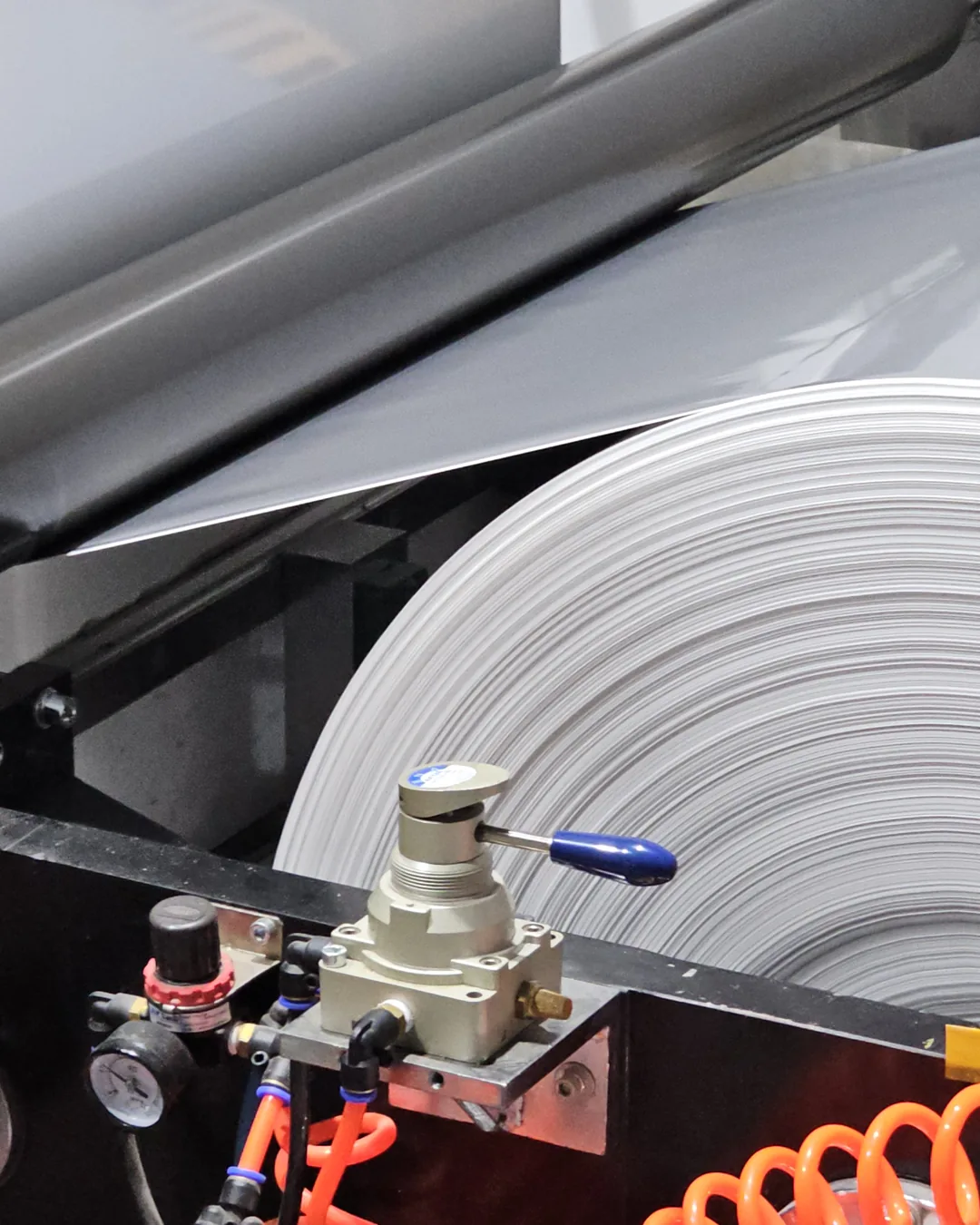
Mavis Packing produces solid aluminum foil bags and aluminum-plated (metallized) bags on our own foil-bag line in Suzhou, for electronics and industrial manufacturers across Southeast Asia. Contact us with category, size, quantity and application for a 24h quote.